
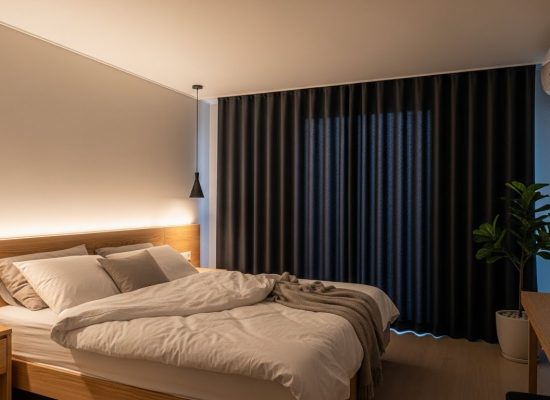
A bedroom is more than a place to sleep—it is your personal sanctuary, the space where your mind slows down and your body recovers. No matter how busy your day is, the quality of your sleep ultimately determines your mood, energy, productivity, and overall health.
The surprising truth is that many people invest in expensive mattresses but still suffer from poor sleep.
Why?
Because their bedroom is not designed for sleep.
In this complete guide, you will learn the scientifically-proven interior design principles that can dramatically improve your sleep quality. From lighting and colors to temperature, acoustics, and furniture placement, every key factor is explained clearly and practically.
1. Bed Placement: The Foundation of a Peaceful Bedroom
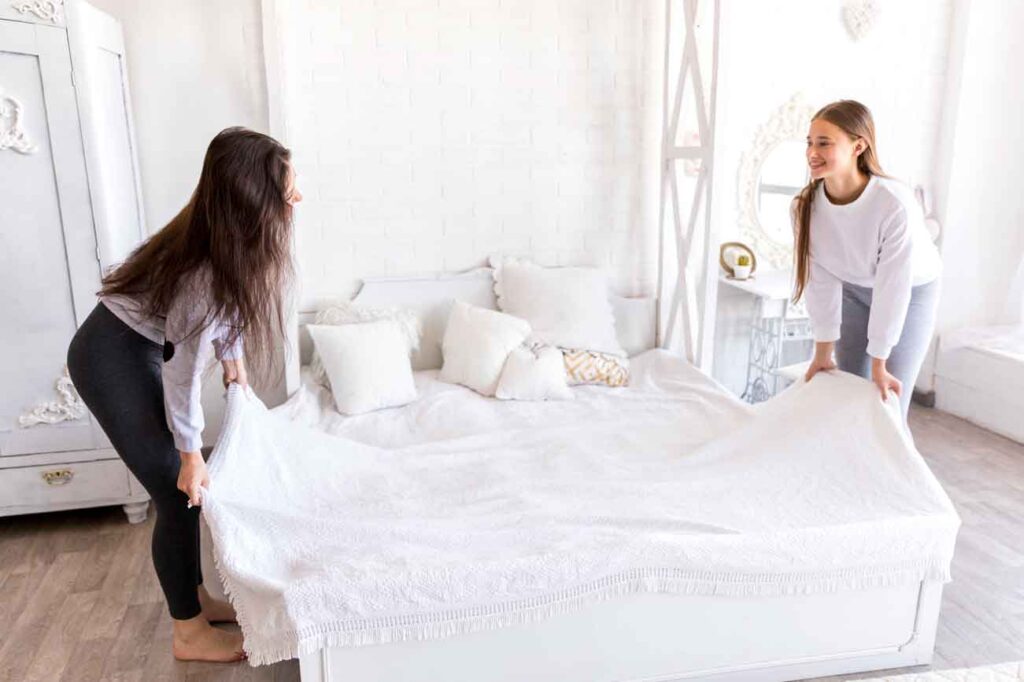
The placement of your bed is one of the most important decisions in bedroom design. It influences how safe, relaxed, and mentally settled you feel while sleeping.
1. Keep the room visible from your bed
When you can see the door, windows, and most of the room while lying down, your body feels more secure.
This psychological sense of safety leads to deeper, uninterrupted sleep.
2. Avoid placing the bed directly in front of the door
A bed facing the door creates subconscious stress—your brain remains alert.
This results in lighter sleep and difficulty entering deep sleep cycles.
3. Ensure a solid wall behind the headboard
A firm, stable wall behind your head provides psychological grounding.
It creates a sense of support and improves overall comfort.
Adding a designer headboard wall, textured panel, or wallpaper can make this the focal point of the entire room.
2. Lighting: Why Warm White Light Is Best for Sleep
Our body follows a natural circadian rhythm.
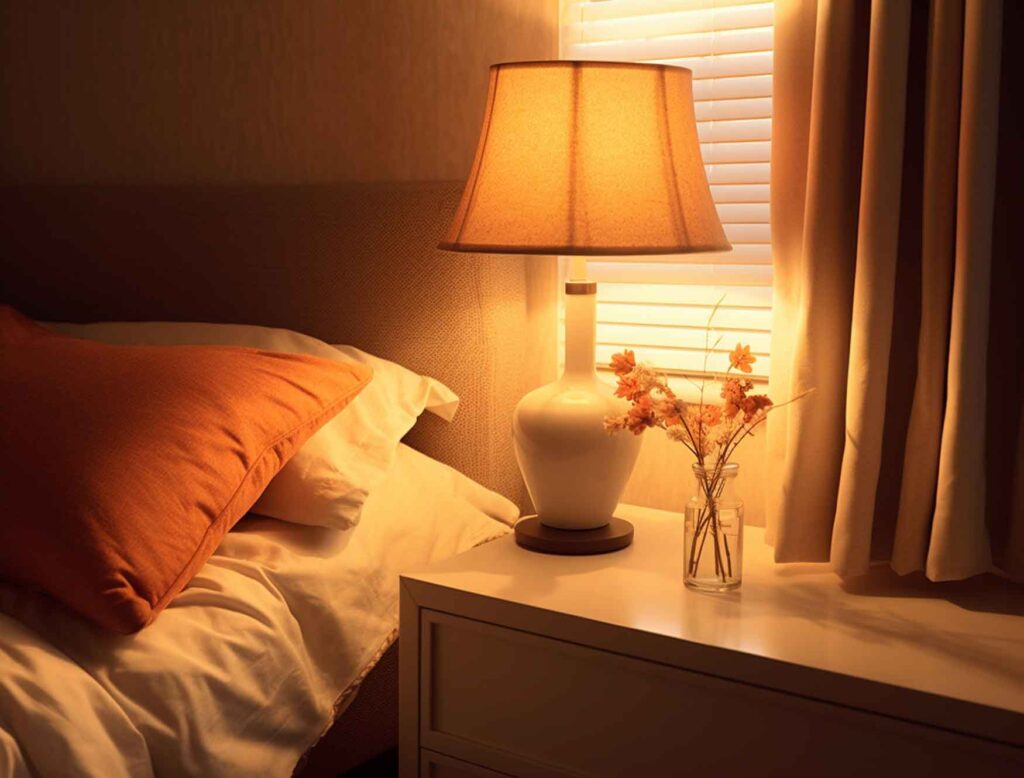
Warm, soft lighting signals the brain that it’s time to relax and wind down.
This is why Warm White Light (2700K–3000K) is ideal for bedrooms.
Why Cool White or blue light is harmful
Cool white light—like the light from phones, tablets, and LED panels—suppresses melatonin, the hormone responsible for deep sleep.
Warm lighting, on the other hand:
- Helps the body transition into relaxation
- Reduces stress
- Promotes faster sleep onset
Use task lights, bedside lamps, and indirect lighting to create a calming ambiance.
3. Curtains: Why You Must Use Blackout Curtains for Better Sleep
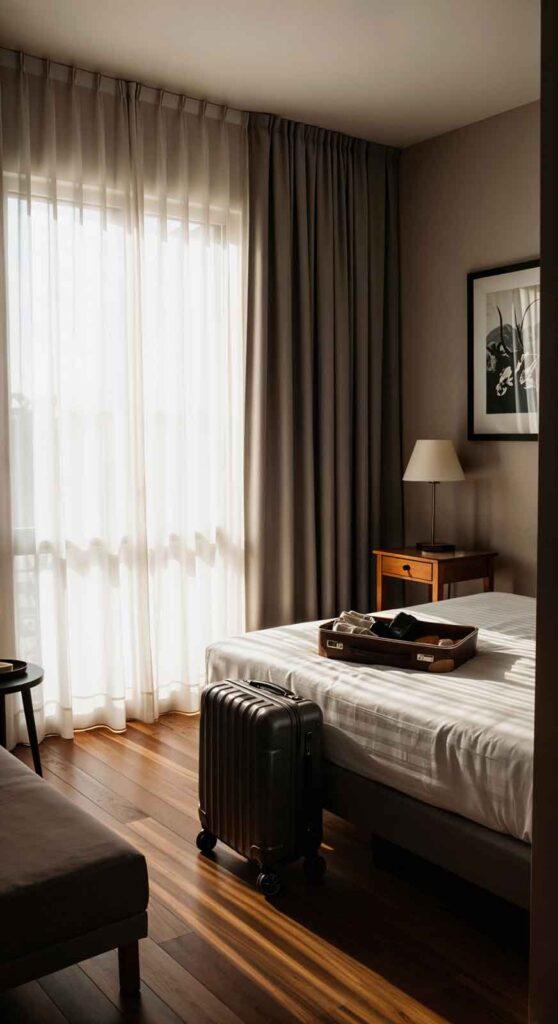
A 2011 study titled “Impact of light in regulation of melatonin in human body” proved that sleeping in darkness increases melatonin secretion and deep sleep quality.
But most conventional curtains allow external light to enter, such as:
- Street lights
- Headlights of vehicles
- Neighboring house lights
- Early morning sunlight
Benefits of Blackout Curtains
Blackout curtains:
- Block 95–100% of external light
- Keep the room significantly darker
- Help maintain melatonin production
- Improve overall sleep depth
Also, their thick fabric adds aesthetic richness and enhances interior design.
4. Soundproofing: Reduce Noise for Deep Sleep
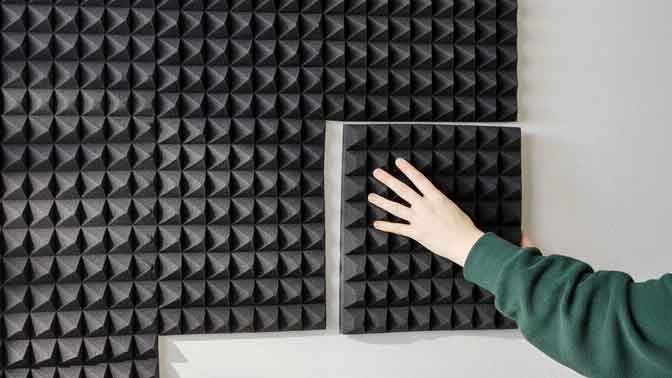
Noise is one of the biggest enemies of restful sleep.
According to studies, the ideal noise level for deep sleep is below 30 decibels.
But in real life, external noise keeps entering:
- TV noise from another room
- Conversations
- Traffic sounds
- Street vendors, morning activity
- Lift or staircase noises
Over time, your ears may ignore it, but your brain does not.
Here are practical sound-control solutions:
1) Double-glazed windows
Double-glazed glass reduces outside noise by nearly 4 times.
It consists of two toughened glass layers with an air gap between them.
2) Heavy curtains
In addition to blocking light, they absorb internal sound and reduce echo.
3) Acoustic seal at the door
A simple acoustic seal around the door edges blocks sound leakage.
4) Thick rugs or carpets
Soft, thick carpets reduce echo and absorb noise from the floor.
5) Full false ceiling with insulation
A full false ceiling (not just border designs) traps sound between ceiling layers.
Adding rockwool or thermocol inside enhances soundproofing significantly.
6) Designer acoustic panels
If your bedroom shares a wall with a noisy room or TV unit, acoustic wall panels can drastically lower sound transmission.
5. Color Palette: The Science Behind Sleep-Friendly Colors

A study by the Sleep Foundation revealed that bold, dark, and highly saturated colors (red, black, yellow, bright green) can reduce sleep quality by up to 20%.
These colors stimulate the brain instead of calming it.
Best colors for a sleep-friendly bedroom
Use pastel or neutral color palettes, such as:
- Light blue
- Light green
- Light yellow
- Beige
- Off-white
- Light grey
These colors:
- Reduce stress
- Improve sleep duration
- Increase total sleep by up to 30 minutes
- Make the room feel soothing and airy
A common mistake: Painting the ceiling
Never paint the ceiling in dark or saturated colors.
Your ceiling is the last thing your eyes see before sleep.
Keep it:
- White or
- Off-white
This increases room height and enhances calmness in the mind.
6. Temperature: Maintain 20°C for the Best Sleep

Scientifically, 20°C is considered the ideal temperature for deep sleep.
AC Placement
Never place the AC directly above or in front of the bed.
Direct airflow lowers the felt temperature, making your body feel colder than the room actually is.
This causes discomfort and disrupts sleep.
Choosing the right AC capacity
Use this simple formula:
- Up to 150 sq ft → 1 Ton AC
- Up to 250 sq ft → 5 Ton AC
- Above 250 sq ft → 2–2.5 Ton AC
If your room is:
- Top floor
- Exposed to sunlight
- Has many windows
Then add +0.5 Ton to the calculation.
False ceiling for heat control
Rooms directly under the roof heat up significantly.
A full false ceiling with rockwool can reduce temperature by 10–15°C, making the bedroom noticeably cooler.
7. Switch Control: Convenience Directly Impacts Sleep
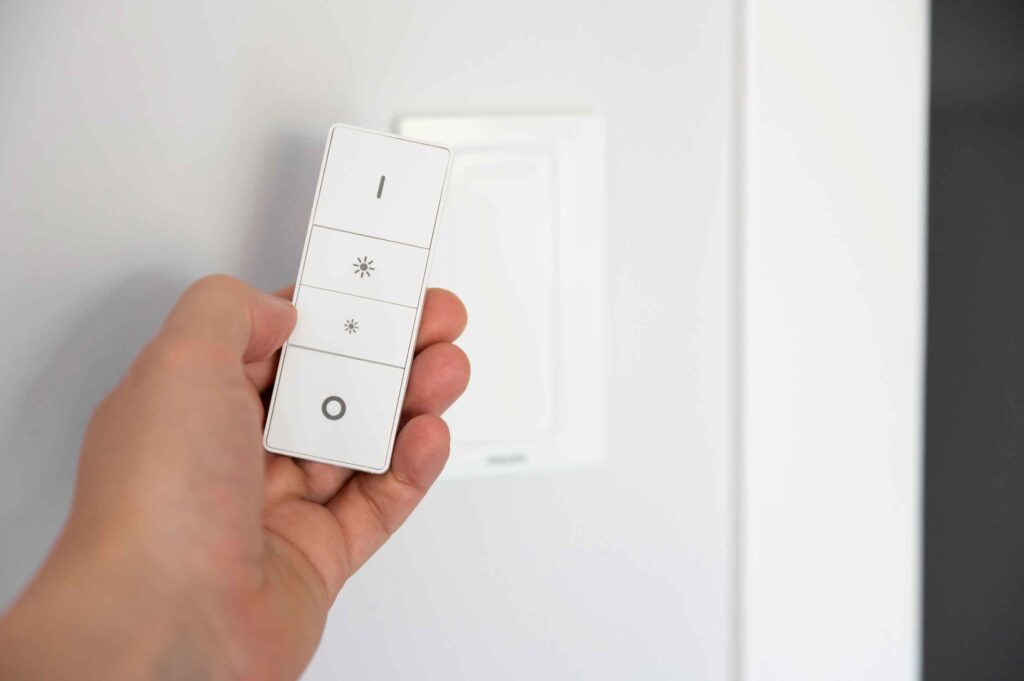
Many people lose their sleep simply because the switchboard is far from the bed.
Solutions
- Install two-way switches beside the bed for lights and fan.
- Or use smart switches controlled via voice or mobile.
This ensures you never need to get up in the middle of the night, keeping your sleep uninterrupted.
8. The Role of Aromatherapy: How Scents Improve Your Sleep Quality
Most people focus on lighting, temperature, and colors when designing a bedroom.
But one powerful factor often gets ignored — the scent of your room.
Your room’s aroma has a direct and scientifically proven impact on your sleep, emotional balance, and mental relaxation.
Researchers have found that certain natural fragrances trigger biochemical responses in the body that reduce stress, calm the nervous system, and prepare the brain for deep sleep.
Below are two of the most effective sleep-supportive scents, backed by modern research.
Lavender: The Classic Calming Scent
Lavender is globally known for its soothing aroma, and multiple studies confirm its ability to enhance sleep quality.
A 2022 study published on PubMed, found that using lavender essential oil significantly improves overall sleep quality, lowers anxiety, and helps the body enter relaxation mode faster.
How to Use Lavender in Your Bedroom
You can introduce lavender into your room in several ways:
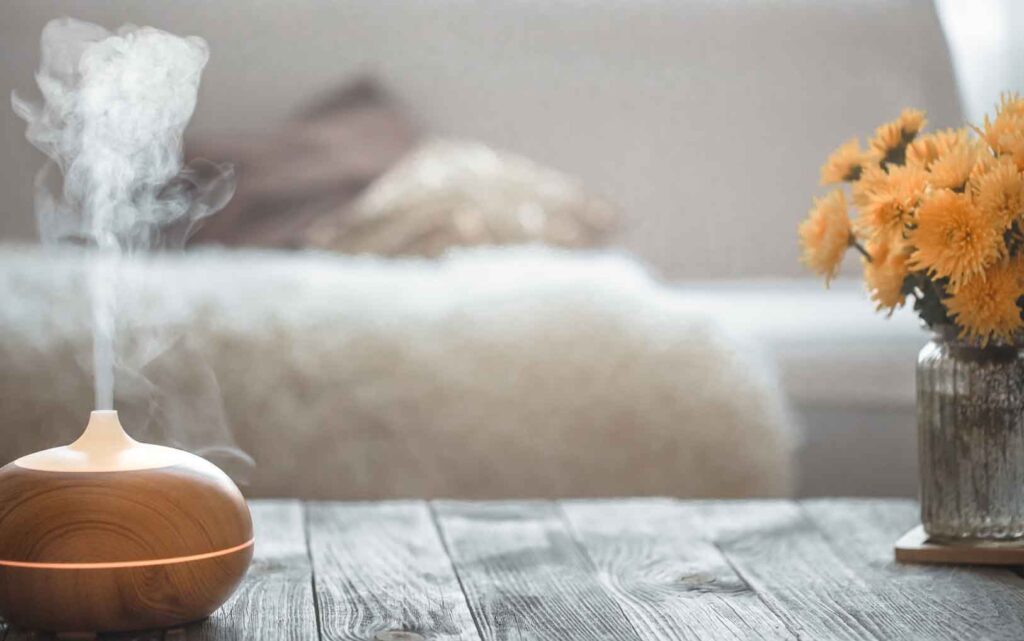
- Essential Oil Diffuser
Turn on a diffuser 1 hour before bedtime.
As the fragrance spreads, it gently relaxes your mind and prepares your body for deep sleep. - Pillow or Room Spray
A light spritz of lavender spray on your pillow or bedsheet creates a comfortable, serene atmosphere. - Scented Sachets
You can also keep small lavender bags inside bedside drawers for a mild, natural aroma.
Lavender is one of the most researched and trusted sleep-friendly scents, making it an excellent addition to a well-designed bedroom.
Chamomile: A Soothing Scent for Relaxation and Stress Relief
Most people know chamomile as a calming tea, but its essential oil offers even stronger benefits when used for aromatherapy.
A research publication in Pharmacognosy Journal shows that chamomile oil helps reduce stress, anxiety, and emotional tension.
It also improves overall sleep quality by promoting natural muscle relaxation and reducing nervous activity.
How to Use Chamomile Aroma
- Add a few drops of chamomile oil to your diffuser
- Use chamomile-scented soy candles
- Apply diluted chamomile oil on pulse points for aromatherapy effects
When used correctly, chamomile creates a peaceful environment that naturally helps the mind unwind.
Why Aromatherapy Matters in Bedroom Design
In interior design, scent is often considered the “invisible layer” of comfort.
The right aroma can:
- Reduce stress hormones such as cortisol
- Promote melatonin production
- Improve sleep onset time
- Deepen slow-wave sleep
- Enhance mood and emotional stability
A beautifully designed bedroom becomes even more effective when the sensory environment is optimized — not just visually, but also aromatically.
9. The Hidden Factor: RF/EMF From Phones & Wi-Fi

Research shows that mobile phones kept near the head can slightly alter brain waves and reduce slow-wave sleep.
Although the effect is small and not conclusively harmful (WHO confirms this), it still impacts sleep indirectly.
Indirect effects
- Notification anxiety
- Mental stimulation
- Doom-scrolling
- FOMO (Fear of Missing Out)
These psychological factors delay sleep far more than RF radiation.
Simple solution
- Put your phone on Airplane Mode
- Keep it away from your pillow
- Follow a digital sunset routine 30 minutes before sleeping
Final Thoughts: Build the Bedroom Your Mind Deserves
A well-designed bedroom is not a luxury—it is a necessity.
Your sleep determines everything: mood, performance, emotional stability, health, productivity.
By implementing the principles above—
lighting, colors, temperature, sound control, layout, and technology—you can transform your bedroom into a true sanctuary of peace.
Need Professional Bedroom or Home Interior Design?
If you want to design your bedroom, home, or office in a scientifically optimized way, our expert team at Dera Interior is ready to help.
We also offer online design consultation for:
- Lighting plans
- False ceiling designs
- Color combinations
- Material selection
- Furniture layout
- Entire room/flat optimization
You can easily connect with our experienced designers directly from the link in the description.
Your home is not just a space—it is a reflection of your life.
Make it beautiful, peaceful, and meaningful.